Biometric checks in Europe: who is affected and what to do
Your passport, citizenship and itinerary matter more than simply whether your flight is within Europe or outside the EU.
Il Piccione Viaggiatore · · 4 min read
The first distinction: outside the EU does not mean outside Schengen
When you read about new biometric procedures and airport queues, the useful question is not just “where am I going?” but also “what document am I travelling with, and which border am I crossing?”. Not all passengers on an international flight are subject to the same checks.
First, a clarification: the European Union and the Schengen area are not the same. Switzerland, for example, is not in the EU but is part of Schengen; Ireland is in the EU but not in the Schengen area. To understand your route through the airport, you therefore need to consider the border you are crossing, not just the label “outside the EU”.
If you are departing from Rimini, Bologna or another Italian airport, consider your full itinerary: a connection may mean that passport control takes place at an airport other than your departure airport.
What EES is and who is affected
The Entry/Exit System, abbreviated to EES, is the European system that electronically records the entries and exits of certain categories of third-country nationals at the external borders of participating countries. Its legal basis is Regulation (EU) 2017/2226.
In general, it applies to non-EU citizens making short stays, whether they need a visa or are visa-exempt. Registration may include travel document details, a facial image and fingerprints, depending on the traveller’s category and the applicable exemptions. This does not mean that everyone has to provide the same data every time.
If you travel as an Italian citizen, you are not subject to EES registration. In general, the system also does not apply to citizens of other EU countries, Iceland, Liechtenstein, Norway and Switzerland. This does not remove normal document checks or any procedures required by the destination country.
For non-EU citizens residing in Italy, the situation must be assessed based on the documents they hold: a residence permit or long-stay visa may mean they are exempt from EES. Specific rules apply to certain categories of family members of European citizens. Residence in Italy alone is not enough to determine which procedure applies.
For scope, exemptions and operational updates, consult the official European EES portal.
Biometrics, automated gates and ETIAS: they are not the same thing
Passing in front of a camera at the airport does not necessarily mean you are being registered in EES. Electronic gates may compare your face with the photograph stored in your travel document as part of other checks too. Access depends on local rules, your passport and the passenger’s age.
ETIAS is also a separate system: it is a travel authorisation for certain categories of visa-exempt non-EU citizens, not a record of a border crossing. It is not a requirement for Italian citizens travelling as EU citizens.
Before applying for authorisations through advertisements or intermediaries, check the official ETIAS portal to see whether the system is operational and whether it actually applies to your situation. Announcements, launch schedules and procedures that are actually available should not be confused.
Where you might face delays
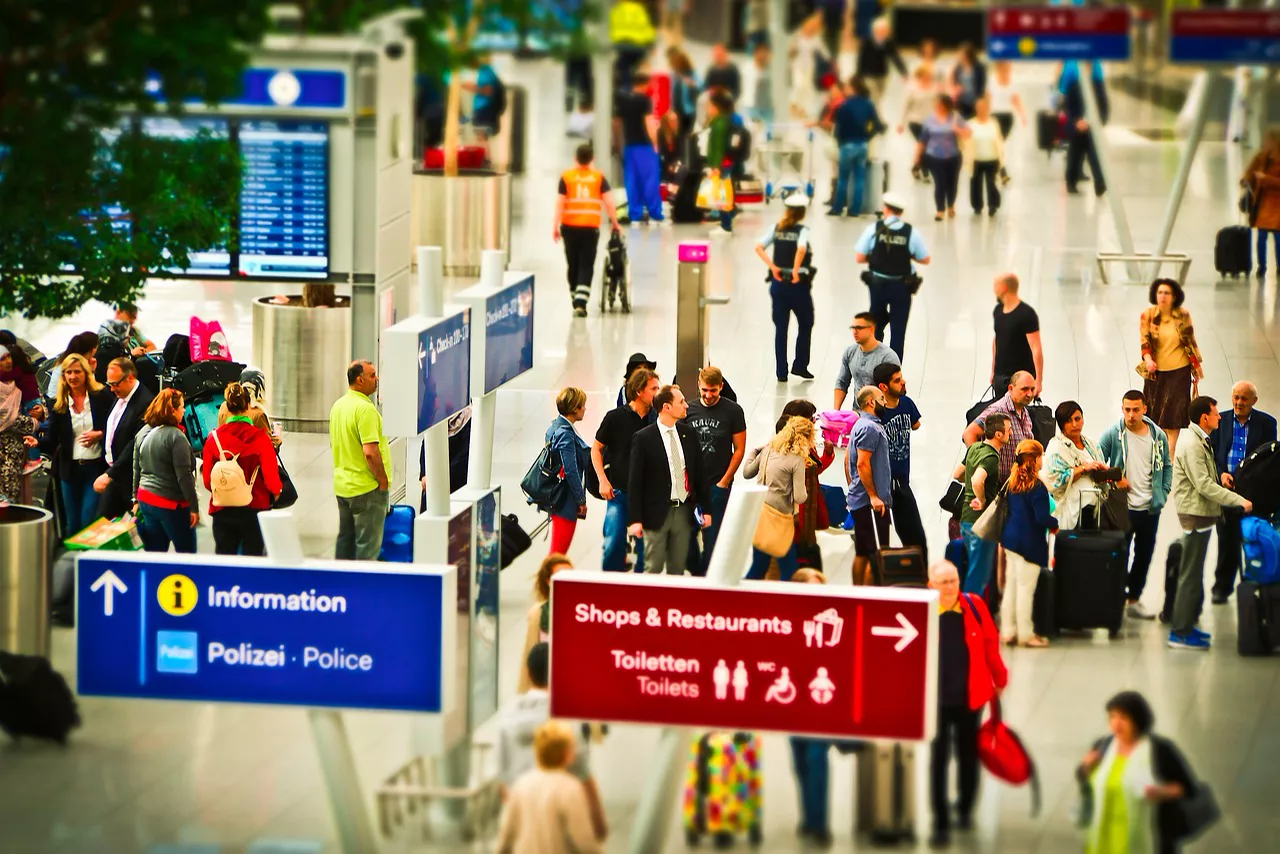
Even if you are not subject to EES, you may pass through a busy border control area. The number of arriving flights, queue arrangements, gate availability and individual checks can affect waiting times. A queue alone does not prove that a delay is caused by the new biometric checks.
On a Bologna–Istanbul flight, for example, you cross the external Schengen border in Bologna. On a Bologna–Frankfurt–Istanbul itinerary with flights within Schengen as far as Frankfurt, exit checks normally take place in Frankfurt. On the return journey, what matters is your first point of entry into the Schengen area.
This is important when you have a connection: the time available must allow you not only to reach the gate, but also to complete any checks. If you are travelling on separate tickets, also allow for the possibility of collecting and rechecking your baggage.
How to prepare without adding stress
There is no single recommended arrival time that applies to every airport and departure. Follow your airline’s and airport’s guidance, distinguishing between the check-in closing time and the gate closing time.
Before you leave:
- Check which travel document your destination requires, its remaining validity and any visa requirements.
- Identify where you will cross the external Schengen border, especially if you have a connection.
- If you are not an EU citizen, also keep your residence permit and other relevant documents available.
- Check the airport’s latest guidance for your travel date.
- If you are travelling as a family or in a group with different citizenships, bear in mind that procedures may differ.
Checks to make before departure
For travel documents, visas, health and entry conditions, consult your destination’s page on Viaggiare Sicuri, checking any transit countries as well. For travellers with citizenship other than Italian, guidance from the authorities responsible for their passport is also important.
For EES and ETIAS, use official European sources; for practical arrangements, check with the airport and airline. The most useful rule is to check your specific situation: citizenship, travel document, residence permit and full itinerary. It is the simplest way to avoid confusing general news with a new requirement that applies to you personally.
What inspired this article: Le nuove regole europee stanno mettendo a dura prova i passeggeri dei voli extra UE
Unsure about the checks on your itinerary?
Write to Il Piccione Viaggiatore with your destination, connections and the travellers’ citizenships, without sending copies of documents straight away. We will help you identify which checks to make before departure.
Cover photo: 652234 / Pixabay